

Whether you’re hoping to support healthy skin or just want a more natural way to feel good day to day, manuka honey is worth trying. But it only counts if it’s raw and authentic, without any adulteration.
I’ve bought and tried plenty of manuka honey over the years, and these manuka honey reviews are based on what actually worked for me, not just what’s printed on the label. Here’s my full breakdown of the best manuka honey brands you can buy right now.
[Note: Some links may contain affiliate links without any extra cost to you]

I was trying several different manuka honeys, since there are so many different products available on the market. I was looking for a combination of high values in MGO and UMF, but also for a good price, and of course the taste had to be pleasant. Manuka honey from NZ Honey Co. checks all the boxes. I enjoy a teaspoon of it every morning, and out of everything I tried, it’s the best on the market for the price.
Having looked into 15 other leading brands of manuka and buying over 6 of them, New Zealand Honey Co. came out ahead of the rest, both in taste and in MGO content. It’s the best manuka honey on the market/brand I’ve tried, for my money.
Manuka honey in general is considered a superfood when it’s raw. But there’s nothing quite like getting your hands on the higher-quality stuff, it fares even better than regular raw honey.
As someone who has been interested in natural remedies for many years, I have always been fascinated by the healing properties of manuka honey.

Manuka honey does more than regular honey. It’s been used for things like sore throats and skin healing, though it’s not an instant fix. But putting it to good use isn’t as simple as just buying a jar; how you use it really depends on the quality of the honey you’ve got.
- High-quality manuka honey is loaded with antibacterial properties, so it’s worth checking for the compounds that come with genuine manuka.
- That means looking at things like UMF certification and the MGO number before you buy, not just relying on the word “manuka” on the label.
So, to make this easier, here’s my full breakdown of the top 10 manuka honey brands on the market.
A quick note: I love manuka honey and use it myself, but I’m not a doctor, just someone who’s tried a lot of jars. Nothing on this page is medical advice. If you’re managing a health condition, pregnant, nursing, or thinking about manuka honey for something more than your morning tea, talk to your doctor first.
People ask me what is the top choice for Manuka Honey more than almost anything else, so here’s the short version before we get into the full list.
Quick Picks: The Best Manuka Honey Brand for Different Needs
If you just want the best brand of manuka honey without reading the whole list, here’s the short version:
- Top Pick — New Zealand Honey Co.: the top choice to buy if you want the best all-around balance of taste, potency, and price. Check Latest Price
- Best Budget Pick — Manukora: affordable and widely available, though it skips UMF certification in favor of its own K-Factor rating. Check Latest Price
- Best Medicinal-Grade — Comvita: consistently UMF-certified since 1974, and the brand hospitals use for wound care.
- Highest Grade Available — PURITI: the only brand on this list offering UMF 31+, and a London Honey Awards 2025 winner.
What is Manuka honey?

Before we proceed to the list, let’s get our basics a bit clear. The benefits of Manuka honey aren’t something that we are unaware of.
Manuka honey originated in New Zealand. It is extracted from the nectar of the Manuka tree. Even though manuka trees can be grown anywhere, the most authentic ones come from New Zealand since it is Manuka’s native place.
That said, before purchasing, it is better to confirm whether they adhere to the New Zealand origin or not. Not taking anything away from other manuka honey products, but the ones where raw honey is sourced directly from New Zealand are to be given precedence.
Even Australian ones are great, and the manuka trees in Australia are called the Tea tree. So the manuka honey can be named Tea Tree honey here. But try opting for the New Zealand manuka honey ones since they are much better and renowned.
The antibacterial and antiviral properties of this New Zealand honey make it the perfect choice for your everyday consumption.
It is a great antiseptic and can effectively heal wounds and cuts. You can even incorporate manuka honey into your beauty regimen since it is pretty beneficial for your skin’s overall health.
Here Are the Top 10 Manuka Honey Brands on the Market (Explained)
1. New Zealand Honey Co. Raw Manuka Honey

Sourced from native New Zealand trees, this UMF 20+ from New Zealand Honey Co. is the first one on this list for a good reason: it’s 100% raw, authentic manuka honey, lab-tested, with the company standing behind every batch.

The best part is that it’s unpasteurized and minimally processed, so what reaches you is raw and pretty much untouched. The unique filtering process is what keeps this one in UMF 20+ territory. Bee bread gets included in the extraction too, which means it carries a good amount of vitamins, flavonoids, plant phenols, amino acids, and other minerals, all good news for your immune system.
Lower grades like 5+ and 10+ work well as everyday immunity boosters. Grades above 15+ get used more for medicinal purposes, and people swear by them for flu, cough, and cold relief. This one skips artificial ingredients entirely, so it’s about as natural as manuka gets, and one of the best raw manuka honey picks if minimally processed matters to you.
It’s thick and creamy, and goes great on an everyday sandwich. The honey goes through low-speed centrifugation, which doesn’t make it any less potent, it’s still just as powerful as the natural version.
2. Manukora Raw Manuka Honey

Best for: potency and traceability. Price: premium.
What stands out here is the dark, distinctive flavor, different from most on this list. It also works well as a topical treatment for minor wounds, and it’s certified as safe and genuine.
It comes in two sizes: 8.82 oz and 1.1 lb (500 g).
Manukora carries solid health credentials, and with a UMF this high, it’s one of the most potent manuka honey options if antibacterial strength matters to you specifically. The traceability system is part of what makes it one I’d reach for regularly. It mixes well into salads, smoothies, and mocktails too.
It costs more than some of the others here, but the quality backs that up.
Each jar is MPI-certified to confirm its authenticity, and the high UMF rating is part of why health practitioners tend to trust it. Each jar also carries a unique source code you can scan to confirm exactly where it came from.
3. Steens Monofloral Manuka Honey – Best For Your Immune System

Best for: immune support. Price: mid-range to premium.
Check Latest Price
Steens leans hard into doing the basics right: real Manuka tree power, combined with honey that hasn’t been messed with. Simple as that.
Each jar comes in 7.9 oz or 17.6 oz sizes.

Steens has a real commitment to raw, unpasteurized honey, and built its own whole-comb extraction process to keep all the qualities of fresh honeycomb intact.
It’s graded with the Manuka factor system for authenticity, independently tested, and certified UMF 20+, which puts it among the highest quality manuka honey options on this list. New Zealand’s own export standards back that up too.
A tablespoon of this in your morning breakfast bowl is a genuinely good way to start the day.
4. Manuka Doctor Manuka Honey UMF 20+

Best for: organic certification and steady potency. Price: mid-range.
Manuka Health blends the science side with the natural side more than most brands on this list, which I find genuinely interesting. It’s solid quality, and it’s earned a loyal following.
Each jar holds 8.8 oz, or 250 g.
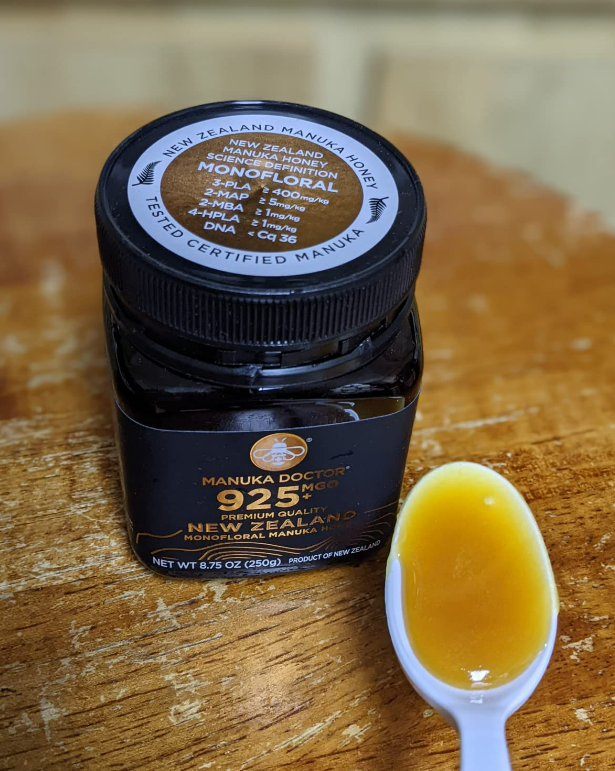
Independent testing puts the MGO rating at 925+, which works out to roughly a 22 UMF rating, a solid number by any measure. It’s also one of the best organic manuka honey picks here, given the 100% pure and organic certification on the label.
It’s fully traceable, and the texture is nicely creamy. The one trade-off: it’s slightly less potent than some of the higher entries on this list, so you may want to use a bit more per serving to get the same effect.
5. Wild Cape Manuka Honey

- UMF 15+ certified
- BPA free packaging
- Sourced from a single origin
- 100% Raw and organic
- Has medicinal properties
Best for: bold, distinct flavor and single-origin sourcing. Price: mid-range.
Check Latest Price
Wild Cape is sourced from New Zealand’s eastern coast, and it has a genuinely distinct flavor profile, intense in a good way. It works well as a natural sweetener across almost any meal.
Each jar holds 8.8 oz.
What sets this one apart is the flavor and the harvesting approach. The focus here is on less-industrial methods, and no artificial honeycombs are used, which is part of what makes this one of the best high quality manuka honey picks if a more natural harvesting process matters to you.
6. Wedderspoon Raw Premium Manuka Honey

Best for: budget-friendly everyday use. Price: budget-friendly.
Check Latest Price
If UMF certification isn’t a dealbreaker for you and you just want a good, more affordable manuka honey, Wedderspoon is worth a look. Whether the lack of UMF matters to you really depends on what you’re using it for.
K-Factor is Wedderspoon’s own way of measuring quality, and it holds up well in practice, with barely any bad reviews. The mono-floral K-Factor 22+ and 16+ versions are the stronger ones. This is a solid pick if you want good quality + affordable manuka honey, and one of the top-class manuka honeys to buy if budget matters most.
Since it isn’t UMF-certified, I wouldn’t reach for it specifically for medicinal use, but for everyday cooking and smoothies, the quality is genuinely good. It’s also great spooned over breakfast pancakes.
Also read: Wedderspoon Manuka honey review
7. Comvita Manuka Honey Raw UMF 20+

Best for: medicinal-grade use and brand trust. Price: premium.
Comvita has been making manuka honey since 1974, and that history shows. It’s UMF-certified, consistently high-quality, and about as authentic as this category gets, which is why I’d call it one of the highest rated manuka honey brands around.
Each jar holds 8.8 oz. The UMF certification means the brand has to stick to real quality-control standards, not just marketing claims.
It’s raw and unpasteurized, so you get the benefits straight from the hive, rather than the pasteurized versions that lose some of that benefit along the way. Comvita is also widely considered the best medical grade manuka honey option for anyone who wants a brand with a long clinical track record.
A tablespoon in your tea, toast, or smoothie gets you the flavor and the benefits together, or stir it into a pre- or post-workout meal for something a little more nutritious.
8. Egmont Honey Manuka Honey
- UMF 5+ through UMF 25+ certified
- MGO certified on every jar
- Non-GMO, Kosher, Halal
- Glyphosate Residue Free
- Fernmark License and MPI Registered Exporter
- Traceable via QR code on every jar
- Packaged in recycled BPA-free jars
- Family-owned and operated
Best for: wide grade range and eco-conscious packaging. Price: mid-range.
Check Latest Price
Egmont is a small, family-run beekeeping business sourcing its honey from the native rainforests of South Taranaki in New Zealand. What I like about it is the range: they carry everything from UMF 5+ all the way up to UMF 25+, which means you can start low and work your way up without switching brands.
Each jar holds 8.8 oz (250 g).
Every batch is independently tested and certified by a government-approved laboratory through the UMFHA, so you’re getting the same verification standard you’d expect from any of the bigger names above. The QR code on the lid lets you trace the honey back to its source, and the recycled packaging is a genuinely nice touch for a category where everything usually comes in heavy cardboard.
The flavor is clean and slightly earthy, with a mild caramel undertone, not as intense as Wild Cape or as dark as Manukora. It’s one of the more approachable genuine best brands of manuka honey on this list, especially if you’re newer to the higher UMF grades.
9. PURITI Manuka Honey
- UMF 5+ through UMF 31+ (MGO 1722+) certified
- Exceeds UMFHA MGO minimums on every grade
- Kosher, Halal, Vegan, Gluten-free, Non-GMO
- Glyphosate Residue Free
- Secure Exports Scheme (SES) and MPI Registered Exporter
- London Honey Awards 2025 winner (UMF 20+)
- Available in 8.8 oz (250 g) and 17.6 oz (500 g)
- BPA-free packaging with counterfeit-proof jar design
Best for: the highest grade manuka honey available, serious potency. Price: premium.
Check Latest Price
If you’re looking for the highest grade manuka honey you can actually buy, PURITI is the brand to know. They’re one of the only companies offering UMF 31+ (MGO 1722+), which sits well above what most competitors produce in any given year.
What’s interesting about PURITI is that they don’t just meet the UMFHA’s MGO minimums, they set their own internal thresholds above the industry standard on every grade. So their UMF 10+ jar carries at least 300 mg/kg of MGO, where the industry minimum for that grade is 263 mg/kg. That extra margin matters if you’re buying for specific wellness goals rather than just everyday use.
The UMF 20+ took home a London Honey Awards win in 2025, which is an independent validator worth knowing about. The taste is smooth with a deep earthiness, and the texture is creamy without being overly thick.
It’s not the most budget-friendly pick on this list, but it’s genuinely one of the most potent manuka honey options you’ll find with full certification behind it.
10. Kiva Raw Manuka Honey
- UMF 5+ through UMF 24+ (MGO 1122+) certified
- UMFHA certified, license no. 2240
- Monofloral, 100% raw
- Non-GMO, Gluten-free
- Glyphosate Residue Free
- Traceable via QR code on every jar
- Available in 8.8 oz (250 g) jars and single-serve packets
Best for: accessible price, easy to find on Amazon. Price: budget-friendly to mid-range.
Check Latest Price
Kiva is one of the more widely available authentic manuka honey brands you’ll find, and it’s a solid entry point if you want something legitimate without going straight to the premium price tiers.
It’s monofloral, independently tested, and carries the UMFHA license, which means the certification is real, not just a label claim. Grades run from UMF 5+ up to UMF 24+ (MGO 1122+), so there’s room to move up as you get more comfortable with the higher grades.
The texture runs slightly granular on arrival, which is normal and doesn’t affect the quality. The taste is sweet with a mild manuka earthiness, less intense than some of the higher-UMF picks above, which some people actually prefer.
It’s one of the more straightforward top rated brands of manuka honey to try first if you’re newer to manuka and want to spend a bit less while still getting something properly certified.
What are the Manuka Honey Grading Systems? Why Are They Important?

Ever wonder why manuka honey doesn’t lose its antimicrobial properties over time? It comes down to methylglyoxal, or MGO, a compound that’s naturally present in manuka flowers and is responsible for keeping the honey’s properties stable.
This is where the standards and certifications from UMF, MGO, and K-Factor come in. They’re how you judge the quality of any manuka honey jar on the shelf.
UMF
Of all the grading systems here, UMF is the most reliable. It doesn’t just measure MGO, it also factors in leptosperin (a compound found only in real manuka nectar, which is exactly why it’s used to confirm authenticity) and DHA, together giving you the honey’s actual non-peroxide antibacterial activity. Grades typically range from 5+ to 30+, and anything above UMF 10+ is generally considered strong enough for medicinal-grade use. The higher the grade, the more pure and potent the honey. For the full breakdown of how UMF certification works, see our Manuka standards guide. If you want the highest grade manuka honey you can get, this is the system to check first.
MGO
MGO, or methylglyoxal, is the single most active ingredient behind manuka’s antibacterial and anti-inflammatory benefits. Look for 500+ MGO specifically, that’s generally considered the threshold where the antibacterial strength really kicks in, and where you’ll find the strongest manuka honey on the shelf.
K-Factor
K-Factor takes a different approach. Instead of medicinal strength, it measures how much of the honey actually came from the Manuka plant, mainly through K-Factor 12, 16, and 22. It’s a genuinely useful way to judge origin, just not antibacterial potency. A K-Factor of 12 is decent; higher is better.
UMF, MGO, and K-Factor at a Glance
| Grading System | What It Measures | Used By | Quick Read |
|---|---|---|---|
| UMF | MGO, leptosperin, DHA, and HMF together | New Zealand Honey Co., Steens, Comvita, Wild Cape, Egmont, PURITI, Kiva, and most UMFHA-licensed brands | Most comprehensive: confirms potency, authenticity, and freshness all at once |
| MGO | Methylglyoxal only, in mg/kg | Manuka Health, Manukora | A direct potency number, but doesn’t confirm authenticity on its own |
| K-Factor | Manuka pollen percentage | Wedderspoon | Measures origin and purity, not antibacterial strength |
How to Spot Genuine Manuka Honey Brands
Genuine manuka only comes from New Zealand (and, depending on who you ask, parts of Australia, since the two industries don’t fully agree on this one). Here’s what I actually check before I buy:
- It has a real UMF or MGO number, not just the word “active.” Without a number from an independent lab, there’s no way to confirm it.
- It says “packed in New Zealand,” not just “sourced from” it. Honey shipped overseas in bulk drums before bottling can get diluted along the way; honey packed at the source skips that risk.
- It’s labeled monofloral or multifloral, not just “blend.” Those are the two real categories. “Blend” with nothing else on the label is one I’d skip.
New Zealand’s government also runs its own five-part verification on top of all this before any honey can legally be exported and labeled manuka. It’s not a perfect system, but a real UMF number is still the most reliable shortcut you’ve got at the store. (I’m working on a full breakdown of how to spot fake manuka honey, check back soon for the link.)
How to Use Manuka Honey (and How Much)
I treat manuka honey more like a supplement that happens to taste good than a pantry staple. A teaspoon a day is plenty for general use; if you’re reaching for a higher grade (UMF 15+ or so) for something specific, like a sore throat, stick to a spoonful at a time rather than spreading it through the day.
One thing worth knowing: don’t stir it into anything boiling. Heat breaks down the enzymes that make the higher price worth it in the first place. Warm tea is fine, a rolling boil isn’t.
Beyond tea, it’s good in yogurt, drizzled over oatmeal, or just eaten straight off the spoon. No need to refrigerate it either, room temperature and out of direct sunlight is all it needs. For more on picking the right jar in the first place, see our guide on how to choose manuka honey. (More on dosage and storage soon, this is getting its own full guide.)
Frequently Asked Questions
1. Who should not take Manuka Honey?
You should stay away from Manuka Honey if you are borderline diabetic or nursing an aggravated form of Hyperglycemia. Also, allergies to bees and being underaged are also reasons enough to refrain from consuming Manuka Honey.
2. Are there any side effects to manuka honey?
Even though Manuka Honey is relatively safe and consuming it shouldn’t be overthought, certain diabetic and allergic individuals have experienced some issues over time. The side effects are mostly negligible and mostly concern elevated blood sugar or an occasional allergic rash.
3. Should manuka honey be refrigerated?
No, Manuka Honey need not be refrigerated. Even though you might be tempted to do so on seeing the consistency, MGO-certified honey contains methylglyoxal, which actually becomes more potent when stored above 10 degrees Celsius. As a natural antibiotic, you wouldn’t want to decrease its impact by freezing it.
4. How long does opened manuka honey last?
Once opened, you can safely use a bottle for up to 3 years. In most cases, the quality and MGO certification mean it lasts well beyond the expiration date. If the texture starts disappearing or it crystallizes heavily over time, it might be time for a new jar.
5. What is the best time to eat Manuka Honey?
Ideally, twice a day. The best single time is first thing in the morning, a tablespoon as part of breakfast, either spread or eaten directly.
6. Can you put manuka honey in hot tea?
Yes, without any issue. This is actually a better approach if you are nursing a sore throat and want a natural cure to kick in.
7. Can manuka honey reduce weight?
As it’s still honey, Manuka Honey wouldn’t directly help you reduce weight. However, if you make it a part of a bigger and healthier lifestyle, like replacing sugar with it or working it into an intermittent fasting schedule, you might expect it to aid weight loss.
8. What does K-factor mean in manuka honey?
K-Factor is a dedicated grading system that measures the purity of Manuka Honey by identifying the correct amount of pollen included in each bottle. However, this metric doesn’t factor in the antibacterial potency.
9. Which manuka honey is best for the immune system?
Every variant of pure Manuka Honey helps to some degree, but I’d point you to Steens Manuka Honey specifically for building immunity. It comes with several antibacterial compounds and high MGO and UMF levels, plus a solid dose of antioxidants.
10. What is leptosperin, and why does it matter?
Leptosperin is a compound found only in genuine manuka nectar. It can’t be added artificially, which is exactly why labs use it to confirm a honey is real manuka rather than a blend.
11. What’s the difference between monofloral and multifloral manuka honey?
Monofloral means the bees mostly fed on manuka flowers, so the honey is closer to pure manuka. Multifloral means it’s a mix of manuka and other nectar sources. Both are genuine, monofloral just tends to carry a higher concentration of the good stuff, and a higher price.
12. How can I tell if my manuka honey is fake?
Look for an actual UMF or MGO number from an independent lab, not just the word “active.” Check that it says “packed in New Zealand,” and that it’s labeled monofloral or multifloral rather than just “blend.”
13. Why is manuka honey so expensive?
Genuine manuka costs several times more than regular honey to produce. It comes from a small number of remote regions, the bees only forage on manuka flowers for a few weeks a year, and every batch has to be independently lab-tested before it can legally use the name.
If you’re still wondering which manuka honey is best for you specifically, it really comes down to what you’re using it for. Daily wellness, something more targeted, or just a better-tasting honey on toast, these are some of the top rated manuka honey brands available right now. If I had to pick just one from this whole list, I’d still reach for New Zealand Honey Co. first. But any of the ten above will get you something genuine and well-tested. If you’ve tried one of these, or have a favorite that isn’t here, I’d love to hear about it in the comments.